 Free Shipping
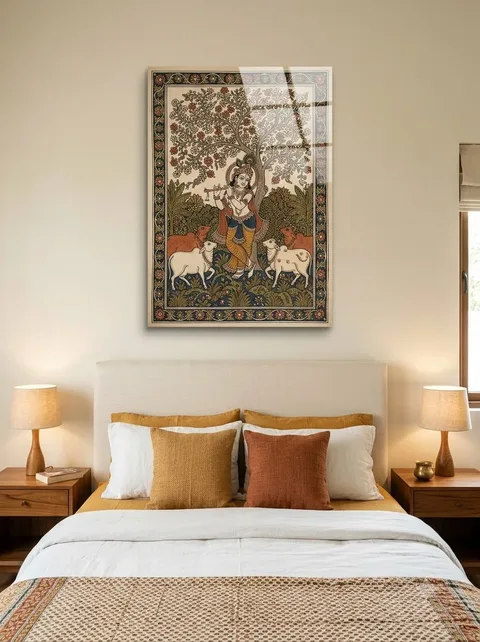
Kalamkari Krishna Cows Kadamba Tree
 Free Shipping
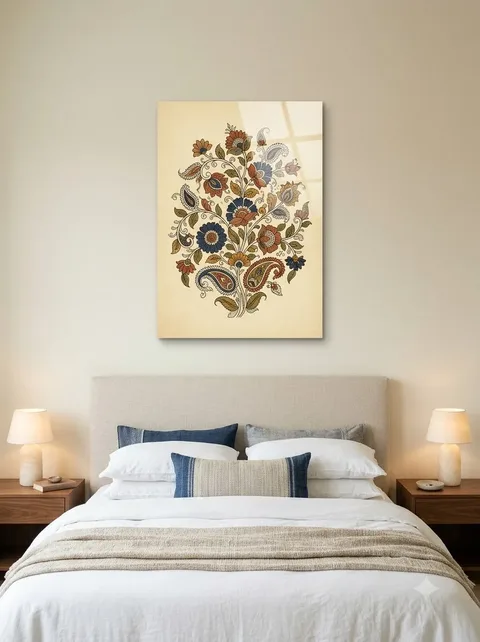
Kalamkari Flowering Tree Life Birds
 Free Shipping
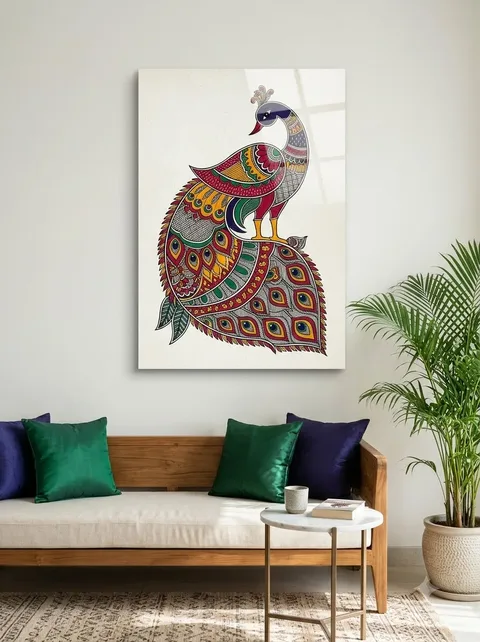
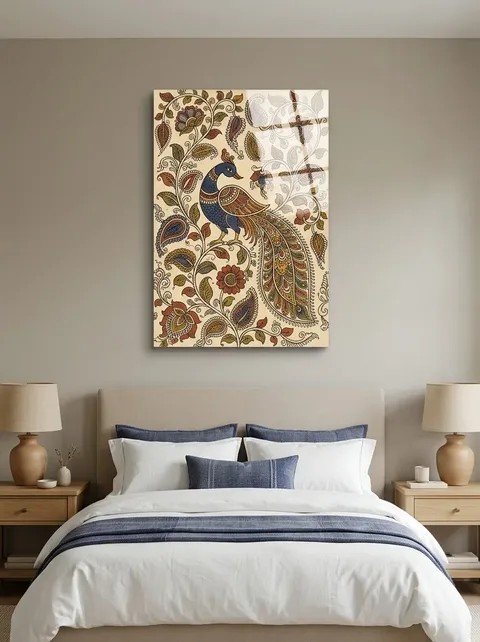
Kalamkari Traditional Peacock Floral Vines
 Free Shipping
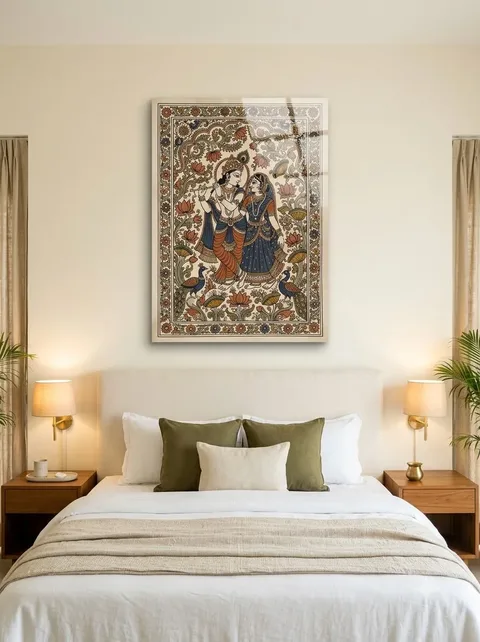
Kalamkari Divine Rama Darbar Temple
 Free Shipping
Kalamkari Peacock Blooming Tree Canopy
About Kalamkari Art Acrylic Wall Art
Kalamkari is a celebrated Indian textile art form originating from Andhra Pradesh and Telangana, historically drawn using a sharp bamboo pen known as a kalam. Renowned for its earthy vegetable-dye color palette of deep indigo blues, warm madder reds, mustard yellows, and muted creams, Kalamkari painting is celebrated for its flowing natural contours and narrative motifs. This collection highlights the timeless Tree of Life motif, where flowering branches intertwine with singing songbirds, majestic peacocks with ornate plumage, and caparisoned temple elephants. Narrative panels also depict classical pastoral scenes of Krishna with grazing cows under blooming kadamba trees. Our modern acrylic renditions preserve the organic charm and hand-drawn quality of ancient cotton scrolls while presenting them on 5 mm imported cast acrylic. Crafted in our Bhubaneswar workshop, each panel delivers rich color depth and polished gloss that will never tear, crease, or discolor, adding authentic Indian textile tradition to modern homes.
Kalamkari Art Art Guide
What colors characterize Kalamkari artwork?
Traditional Kalamkari relies on earthy vegetable tones including deep indigo, rich rust red, warm mustard, and soft unbleached cream.
Which rooms look fitting with Kalamkari art?
Kalamkari panels complement master bedrooms, living room sitting areas, study libraries, and hallway walls with warm wooden furniture.
Does the acrylic print retain the textile fabric feel?
Our high-precision UV printing reproduces the delicate weave textures and organic pen linework of traditional hand-painted fabrics.
How is the panel packed to prevent transit damage?
Each acrylic piece is wrapped in protective film, secured with thick foam corner guards, and shipped in rigid wooden crates across India.